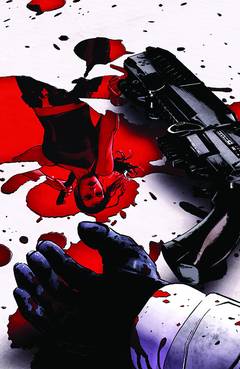
Jarrod Beauchamp reviews Sex.
![SEX VOL 01: SUMMER OF HARD [(W) Joe Casey (A/CA) Piotr Kowalski]](https://lh3.googleusercontent.com/blogger_img_proxy/AEn0k_shjdc8mxqhC8MzcIp-UICy0KvYFyira-RHdfi20UmtrxufqmLmKnghqWi8WB1QZXA-FLdpjChoVsste_FMnaJ1_5mNjNr75E1WgFIUOs_uqKucdztbBoXbxJ2YNimFNCsB-A=s0-d "SEX VOL 01: SUMMER OF HARD [(W) Joe Casey (A/CA) Piotr Kowalski]")
Image Comics, Sex Book 1: The Summer of Hard is the most interesting Batman story currently on the shelvesSex, written by Joe Casey and art by Piotr Kowalski tales the story of Simon Cooke, a now retired superhero living out his life as a billionaire playboy, enjoying his life of extravagance and running his multi-million dollar company. However as a retired superhero, Mr Cooke finds himself with a lot of free time. As he can no longer spend his nights getting dressed up in leather and rolling around in the dark with mysterious unnamed people, he now realises he must spend his nights getting dressed up in leather and rolling around in the dark with mysterious unnamed people.Simon himself has the possibility to go on to become a very interesting character, during the first book, we see a man realise that he has nothing to go on from being a superhero. A man who has no personality or identity of his own. He is a man made up of his now retired Superhero identity and a view of birth name given to him by the press and the upper class of society. What we have is a backwards origin story. It's Batman creating Bruce Wayne after Batman is over. The Batman of this story is known as The Armoured Saint, who is briefly seen in flashback and mentioned in hush tones by the hero’s former villains. Former villains who each are an allegory for various members of Batman’s rogues gallery. Including a major supporting role for the book version of Catwoman known as Annabelle Lagravenese, who has also took up retirement and now spends her day running a strip club come brothel. The only true remaining superhero left in the city is the book's stand-in for Robin, Keenan who continues to fight crime without the aid of his mentor. Keenan, like Cooke, has thepossibility of going on to become a very strong character in his own right, especially within the context of the book. Keenan not only manages to remain a superhero to some degree but he also manages to maintain a sex life and relationship, presented in such a way to bring to mind the love scenes between Mookie and his girlfriend from Spike Lee’s film Do the Right Thing. In a world of fake smiles and downtrodden inner monologues of Simon Cooke and Annabelle Lagravenese. A reader will realise how important Keenan is. Not only is he the last remaining stand for vigilante justice in the city but he is possibly the only upbeat character in the book.The book standing as almost an alternative history for Batman is both its biggest strength and weakness. Very, very quickly you will realise that these are Batman’s heroes and villains under different names in a city that brings Gotham a little too far into the mind. The city even has blimps hovering above its sky line of towering skyscrapers. Casey uses this to his advantage; he does not spend long periods of time setting up the main cast as we already know who they are. Anyone who has ever read a Batman story (or watched Chris Nolan's adaptations) will be able to pinpoint who these characters are meant to be, but for copyright they cannot be that. There is nothing overly wrong with this is an age old comic technique, used is everything fromWatchmen to Astro City. The difference is in those titles in never gets to a point of been distracting, A sense is given that at one point there was a meeting at DC about the possibility of this actually being a Batman story that ended in the words ‘’absolutely not’’. However if DC are unwilling to be open to the concept of opening the door to superhero sex lives in their line-up it is good that it still found its foot hold. At the end of the book the mind does begin to wonder onto why such a thing has not happened previously. We have had violent, dark and brooding Batman titles for years (Since 1986, let's be honest) but how come Batman hasn’t broken down the door to see The Joker and Harley Quinn getting down and dirty with each other. It’s an interesting thought, like cinema before it. Violence has been wildly accepted in the medium for decades, yet still we hide away from the topic of sex. This leads to the biggest issue with the book. The pattern of every issue follows the same structure, some interesting plot and character development for a few pages, instantly followed by a sex scene that doesn’t have anything to do with the conversation at hand. Or there will be a sex scene going on during a conversation, and it is paid little to no attention. It shares this in common with Alan Moore’sLost Girls (The one title he never has to worry about turning down film money from). The Story is interesting but can never go long enough with the sex interrupting it, the purpose is clearly to keep the thought of Sex in the mind of the reader and in a sense the mind of Simon Cooke.The fact that all characters are so open to the concept of Sex except Cooke leads to an interesting crossroads for the reader, a crossroads which the writer is yet to push us down on emotional path. Readers can either feel sorry for Cooke for his inability to open to the concept of sex and embrace it as a part of day to day life, to acknowledge and embrace it in everything from advertising to displays of power to an explanation of why people wear the clothes that they wear. Alternatively you can choose to sympathise with Cooke and his difficulty to accept this force change in life style. As that basis of the story is a man giving up an addiction and attempting to replace it with a socially acceptable one. Casey would be a smart man to leave the reader at this cross roads for the length of the books run, though with the way this book ends. It is difficult to determine which direction the book will be heading in the future.The Highlight of the book however, is the art work by Piotr Kowalski. Welcome to the most stylised story of repression you are every likely to read. The contrast of images drawn is vast and wide all with absolute attention to detail. The point of the art hitting its true stride is during a scene in which Annabelle Lagravenese masturbates to memories of been chased across rooftops by The Armoured Saint. There is very little dialogue beyond that of moans to carry the scene. The art work tells the entire story, not only does it tell it well but manages to make it a pivotal and dignified moment for the character. Brad Simpson however is the unsung hero of this book. The colourist manages to make no two pages have the same palette, board rooms filled with deep moody blues, night clubs filled with warm alcoholic hazed oranges and an orgy filled with hot reds and yellow. The colour work makes the book feel at times like a satire of a 1960’s spy film and at times like an icy thriller but, needless to say, each panel is coloured to perfection.
Overall Sex: The Summer of Hard, is a good start to what hopes to be a great series going forward. Starting with the unnamed Batman characters in issue #1 by issue #8 they begin to take on their own identities and hint towards and bright and intelligent future. Carried on by breath taking art and a concept that mainstream comics are so devoid of, the book is well worth your time and money.
SEX VOL 01: SUMMER OF HARD
available now
in stock Wednesday 27th of August
If you have any reviews or articles you would like to see published please get in touch either via Facebook, via thecomicbookshop.co.uk website, or Twitter @amazingfantasy